The Faceless Muse: A Brief History and Modern Craft of Anonymity in Professional Imagery
There is a long and surprisingly dignified tradition of the anonymous portrait. In the salons of nineteenth-century Paris, courtesans commissioned painters who rendered them in profile, in shadow, or turned entirely away from the viewer—recognizable to patrons, invisible to the disapproving public. What we now call 'faceless photography' is not a workaround of the digital age. It is a craft with a lineage, and understanding that lineage sharpens the way we practice it today.
Anonymity as an Aesthetic, Not an Apology
The most common error in anonymous imagery is treating it as a deficiency—photos that apologize for what they omit. The opposite approach has always been more effective. When the face is withheld, everything else must speak: the curve of a shoulder, the drape of silk, the architecture of a hand resting on a windowsill. The great portraitists understood that a suggestion of identity can be more magnetic than its full disclosure.
Modern professionals inherit this principle directly. A photograph cropped at the lips, shot in profile, or obscured by intentional shadow reads as deliberate and confident. A photograph that is simply blurry reads as careless. The difference between the two is the difference between mystique and neglect.
The Technical Vocabulary of the Unidentifiable
Certain compositional techniques have become the standard grammar of anonymous imagery, and they are worth mastering deliberately:
- The jaw-line crop: framing from the nose or lips downward preserves expression through posture and styling while eliminating the most identifiable feature
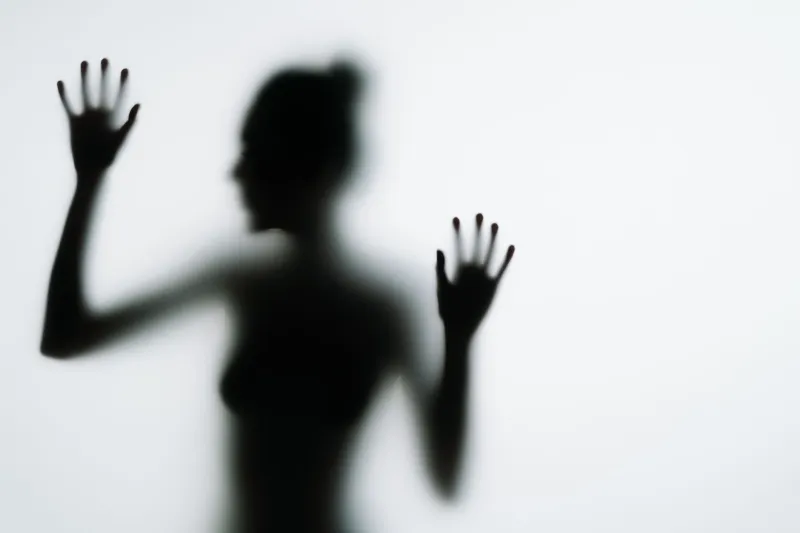
- Backlight and silhouette: shooting toward a window renders the subject as shape and contour, memorable precisely because it withholds detail
- Hands, hair, and wardrobe as identity: signature jewelry, distinctive nails, or a consistent color palette can become as recognizable as a face—many established professionals are identified by their aesthetic alone
- Environmental context: recognizable skylines, hotel chains, or street signage can leak location; neutral backdrops protect both identity and geography
Lighting deserves particular attention. Soft, directional light from a single window flatters without the harsh honesty of overhead illumination, and it deepens shadows exactly where facial detail would otherwise live.
Watermarks and the Afterlife of an Image
Once published, an image travels further than its owner controls. Watermarking—a discreet handle placed in a consistent location—does not prevent theft, but it converts every stolen image into an advertisement and makes takedown claims far easier to substantiate.
Reverse-image search is the other half of the discipline. Periodically running your own images through reverse-search tools reveals where they have migrated, which platforms are hosting them without consent, and whether any have been altered in ways that threaten your privacy. Setting a quarterly reminder for this audit is one of the highest-return habits in professional self-management.
The Persona Behind the Camera
The faceless aesthetic extends beyond photography into the entire visual identity: color palettes, typography, logo marks, and the tone of written copy all combine into a persona that clients learn to recognize across platforms. Consistency here is not vanity—it is operational security. A coherent visual brand means clients verify you through style and track record rather than through identifying details, and it means your professional presence can be rebuilt from scratch if any single account is compromised.
An Old Craft, Newly Urgent
The Parisian painters worked in oil; today's professionals work in natural light and a phone camera. The underlying problem is identical: how to be vividly present to the people who matter while remaining genuinely absent to everyone else. Solved well, anonymity stops being a limitation and becomes the signature itself—proof that what you offer was never about the face in the frame.