Where Opportunity Travels: Understanding Demand Corridors and Micro-Market Dynamics Across the American Landscape
The United States is not a single market. It is a mosaic of regional economies, cultural climates, and mobility patterns — each producing its own distinct rhythm of demand. For independent professionals operating in the adult services sector, understanding this geographic complexity is not an academic exercise. It is a practical competitive advantage.
The professionals who thrive across multiple markets are rarely the ones who simply move frequently. They are the ones who move intelligently — reading terrain the way a seasoned navigator reads a map, identifying where demand concentrates, when it peaks, and why certain corridors consistently outperform others.
The Highway Effect: Infrastructure as Demand Architecture
America's interstate highway system was designed to move goods and people efficiently. As a secondary consequence, it also created predictable corridors of transient population density — and with that density comes concentrated, recurring demand for companionship services.
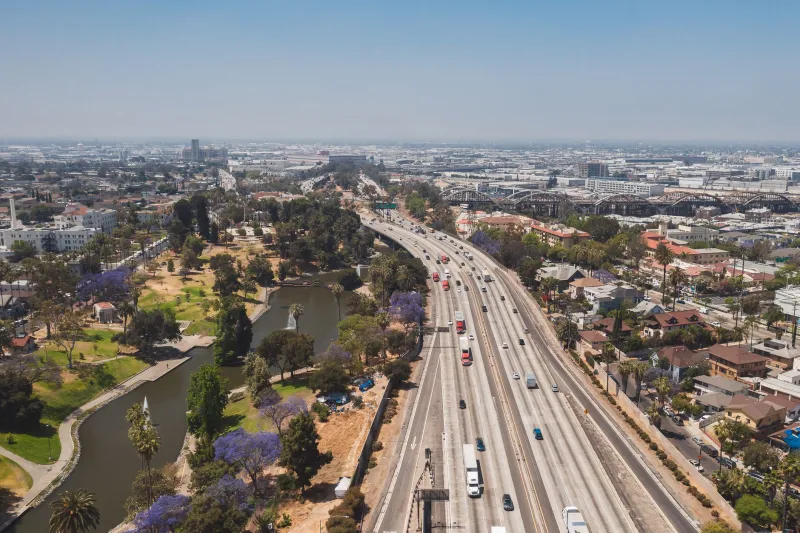
Interstate 10, stretching from Jacksonville to Los Angeles, passes through some of the nation's most economically diverse metros: Houston, San Antonio, Tucson, and the greater Los Angeles basin. Each city along this corridor functions as a distinct micro-market with its own client profile, price sensitivity, and booking behavior. A professional who understands the differences between these nodes — rather than treating the corridor as a monolith — operates with a measurable informational edge.
Similarly, the I-95 corridor along the Eastern Seaboard represents one of the most densely populated stretches of road in the country, threading through Boston, Providence, New York, Philadelphia, Baltimore, Washington D.C., and Miami. Business travel along this spine is relentless and year-round. The client demographic here tends to skew toward corporate travelers, convention attendees, and government-adjacent professionals — individuals with predictable schedules, expense accounts, and a preference for discretion.
Recognizing which highway corridors generate consistent transient demand versus which produce primarily local, weekend-oriented clientele allows professionals to align their availability calendars with the actual flow of opportunity.
Business Travel Hubs: The Anchor Points of Consistent Demand
Within any geographic analysis, certain cities function as gravitational centers — places where business travel concentrates regardless of season. These anchor markets share common characteristics: major airports classified as international or primary hubs, significant convention center infrastructure, and dense clusters of corporate headquarters or regional offices.
Atlanta, Chicago, Dallas-Fort Worth, and Las Vegas consistently rank among the highest-volume business travel destinations in the country. Each hosts hundreds of major conventions, trade shows, and corporate events annually — events that bring concentrated waves of out-of-market visitors with both the means and the motivation to seek companionship.
The strategic professional monitors public convention calendars. Major industry gatherings — technology conferences, medical conventions, financial summits — generate predictable surges in demand that can be anticipated weeks or months in advance. Positioning availability to align with these events, rather than reacting to demand after it has already peaked, is the difference between capturing opportunity and observing it.
Secondary cities with strong regional business ecosystems — Nashville, Austin, Denver, and Charlotte among them — deserve equal attention. These markets have grown substantially over the past decade, attracting corporate relocations and regional headquarters that sustain demand even outside traditional peak periods.
Tourism Flows and Seasonal Demand Windows
Leisure tourism creates an entirely different demand pattern, one shaped by season, geography, and cultural calendar rather than the corporate meeting cycle. Understanding the distinction between business-driven and tourism-driven demand is essential for professionals who travel or who serve multiple market types.
Coastal markets — Miami, Myrtle Beach, San Diego, and the Gulf Coast stretch from Pensacola to Galveston — experience pronounced seasonal surges tied to warm-weather visitation. Spring break windows, summer family travel, and holiday shoulder seasons each produce identifiable spikes in transient population. Professionals who position themselves in these markets during peak periods and retreat to stable business-travel anchors during off-seasons can construct a year-round income architecture that resists the volatility any single market would impose.
The Mountain West presents a different seasonal logic. Cities adjacent to major ski resorts — Denver, Salt Lake City, and Reno — experience strong winter demand driven by leisure travelers with significant disposable income. The same geography transitions into summer outdoor recreation tourism, sustaining demand across a broader annual window than many coastal markets.
Entertainment districts within major metros function as micro-markets unto themselves. The French Quarter in New Orleans, the Las Vegas Strip, Nashville's Lower Broadway, and Austin's Sixth Street corridor each generate localized demand patterns tied to nightlife, live events, and leisure spending. Professionals who understand the event calendars governing these districts — major music festivals, sporting championships, holiday celebrations — can time their presence with precision.
Regional Economic Conditions and Client Demographics
Demand is not only a function of geography and movement — it is also a reflection of local economic health. Regional prosperity shapes client demographics, price tolerance, and booking frequency in ways that are often underestimated.
The energy corridor stretching across Texas, Oklahoma, and North Dakota has historically produced a distinctive client profile: well-compensated industry workers on rotation schedules, often operating far from their home communities. These clients tend to book with regularity, value consistency, and demonstrate lower price sensitivity than the general market. Understanding where active extraction economies operate — and when rotation schedules bring workers back to hub cities — creates targeting opportunities that geography alone would not reveal.
Technology clusters in the Bay Area, Seattle, and the Research Triangle in North Carolina generate client demographics shaped by high income concentration and a professional culture that normalizes discretion. These markets often reward premium positioning more reliably than average-income metros, but they also demand a higher standard of presentation and communication from the professionals who serve them.
Conversely, markets experiencing economic contraction or industrial decline may present lower overall demand ceilings, requiring professionals to adjust their rate structures or redirect their geographic focus accordingly.
Constructing a Personal Demand Map
The practical application of geographic market intelligence begins with data collection. Professionals who track their own booking histories against location, season, and event context accumulate proprietary insight that no external analysis can fully replicate. Over time, patterns emerge: which cities generate repeat bookings, which events correlate with inquiry surges, which corridors produce the most compatible client profiles.
This personal demand map becomes a living strategic document — one that informs not just where to travel, but when to be present, how long to remain, and when to redirect energy toward a more productive market.
The American landscape, read through this lens, ceases to be a passive backdrop and becomes an active strategic resource. Highway corridors become demand pipelines. Convention calendars become advance booking intelligence. Regional economic conditions become client demographic predictors.
For the independent professional willing to invest in this level of geographic literacy, the reward is not merely incremental — it is a fundamentally more stable, more profitable, and more intentionally constructed professional practice.